







(You don’t need insider knowledge, just basic math)
There’s no need to name brands here. A quick Google search and a look at the shopping results will surface them on their own. What matters is not who is making the claim, but what that claim actually means and whether it can support what consumers are led to believe.
This article examines how these claims are typically made and interpreted, not the intent or conduct of any specific company.
How the “mycotoxin-free” story took hold
For decades, specialty coffee operated on a simple truth: when coffee is properly grown, dried, stored, and handled, mycotoxins are not a meaningful risk. This was standard industry knowledge.
Mycotoxins do not naturally exist in coffee. They form only under specific conditions such as excessive moisture, improper drying, contamination, or long-term poor storage. Those risks have traditionally been managed upstream, long before coffee ever reaches a roaster or a consumer.
As wellness marketing expanded and fear-based food narratives became more common, coffee was pulled into a broader category of “potentially dangerous” everyday products. Simplified claims replaced nuanced explanations. Instead of talking about process, some brands began talking about absence. That is how “mycotoxin-free” entered the retail vocabulary.
What consumers reasonably assume
When consumers see “mycotoxin-free,” most assume that every batch is tested, that testing is frequent, that the claim applies to the coffee they are buying now, and that the label represents certainty rather than probability. Those assumptions are understandable. In practice, they are not supported by how testing is actually performed in commercial coffee production.
What the claim usually rests on
In practice, most “mycotoxin-free” claims rely on limited third-party testing. This often means one or two tests per year, performed on a single batch, sometimes on green coffee that is roasted months later, using a very small sample size.
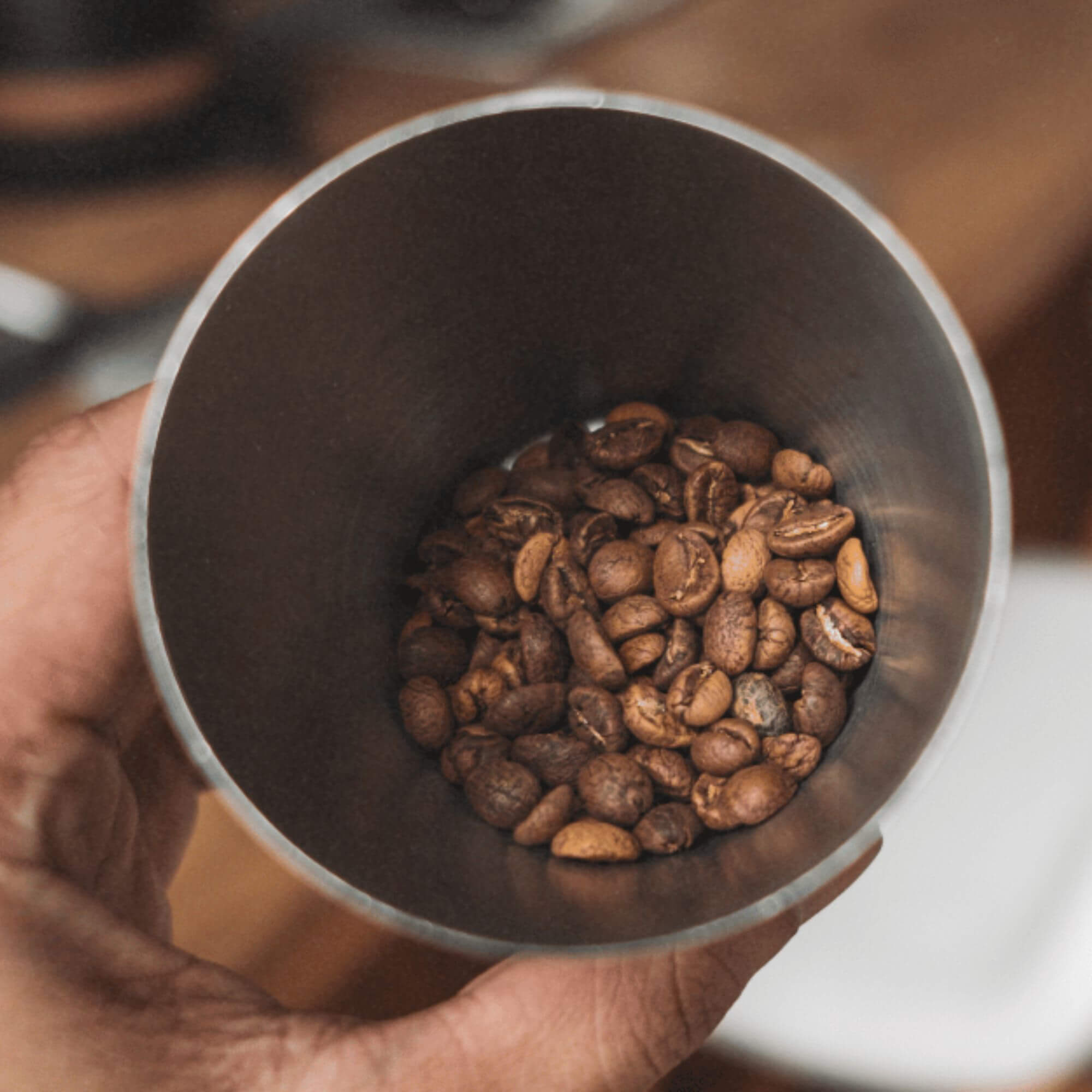
A comprehensive lab test typically costs around $500 and requires about 100 grams of coffee. A standard bag of green coffee weighs 132 pounds, or 59,928 grams. A 100-gram sample represents approximately 0.17 percent of a single bag, about one six-hundredth of that bag.
In practical terms, testing every individual bag of green coffee is not how commercial coffee operations function. Even testing one bag per pallet, roughly ten bags, would be highly unusual in the industry. If you encounter a company that claims to test every bag or every pallet of green coffee, that claim deserves careful scrutiny.
Sampling itself is not unusual. The problem arises when that sample is interpreted or presented as a guarantee for everything sold under that label.
What a certificate actually proves
A laboratory certificate confirms one narrow fact: on a specific date, a specific sample from a specific lot tested below a defined threshold.
It does not prove that all bags in that lot are identical. It does not prove that future shipments are equivalent. It does not prove that storage conditions never change. It does not prove that every roast shares the same characteristics.
When a single certificate is presented as a blanket assurance, the limitation is not scientific. It is interpretive.
Why fear works better than explanation
Process is complicated. Fear is simple.
Explaining moisture percentages, drying protocols, storage logistics, grading standards, and supply-chain controls takes time. A single phrase like “mycotoxin-free” takes none.
For consumers already dealing with health anxiety or chronic illness, reassurance is powerful. A label feels safer than a paragraph. That does not mean consumers are wrong for wanting clarity. It means simplified messaging often replaces education.
The role of authority and credentials
Some brands are founded or endorsed by people using medical titles. Credentials may signal expertise, but they do not replace transparency. They also do not automatically validate marketing claims made outside a clinical context.
Authority should invite questions, not shut them down.
Why even responsible roasters adopted the language
As the phrase became widespread, silence began to look suspicious. Many roasters who had always sourced and handled coffee responsibly felt pressure to adopt the terminology, not because their coffee changed, but because consumer expectations did.
This is how market narratives spread. Not because they are scientifically necessary, but because they become commercially unavoidable.
How consumers can evaluate the claim themselves
You do not need insider information. You just need basic math.
Any legitimate coffee roaster should be able to answer four straightforward questions: What is your average roast batch size in pounds? How many batches do you roast per day, week, month, or year? What percentage of total roasted volume is tested for mycotoxins? How frequently is testing performed, daily, weekly, monthly, or yearly?
If answers are vague, indirect, or replaced with certificates instead of numbers, that distinction matters.
What often emerges is a business model centered on marketing narratives, with coffee functioning more as the vehicle than the focus.
Why full testing is not economically realistic
Consider a hypothetical example. Assume a roaster produces 132 pounds per day. Testing that entire volume would require approximately 599 individual 100-gram tests. At $500 per test, that equals $299,500 per day, or roughly $2,270 per pound.
That level of testing is not economically viable at scale.
Now assume that same roaster produces 3,960 pounds per month, or 1,797,840 grams. A single 100-gram test represents approximately 0.0056 percent of monthly production. Neither scenario provides the level of certainty consumers are often led to assume.
Where real risk control actually happens
If you want to understand how mycotoxin risk is actually managed, look upstream. Specialty coffee importers focus on moisture thresholds at origin, controlled drying, proper storage and transport, defect screening, grading, and lot-based evaluation.
This is why asking an importer whether their green coffee is “tested for mycotoxins” often leads to a discussion about process, not labels. Risk is prevented long before coffee reaches a bag.
What this means for consumers
This is not an argument against testing. Testing has value when used appropriately. It is an argument against over-interpreting limited samples and against replacing process with slogans.
“Mycotoxin-free” should not be treated as a feature or a differentiator. It should be the expected outcome of competent sourcing, handling, and roasting.
The bottom line
When claims are simplified beyond what the data can support, consumers are left to fill in the gaps. Understanding the math, the limits of sampling, and the supply chain restores perspective.
You do not need fear to choose good coffee. You need transparency, process, and context. Those have been part of specialty coffee long before the label ever existed.
This article is for general informational purposes only and reflects industry practices and publicly available information, not claims about any specific company or product.




Leave a comment
All comments are moderated before being published.
This site is protected by hCaptcha and the hCaptcha Privacy Policy and Terms of Service apply.